
Multilingual education – a necessity to transform education
Globally 40 per cent of the population does not have access to an education in a language they speak or understand. But progress is being made in multilingual education with growing understanding of its importance, particularly in early schooling, and more commitment to its development in public life.
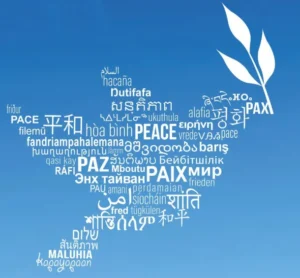 International Mother Language Day recognizes that languages and multilingualism can advance inclusion, and the Sustainable Development Goals’ focus on leaving no one behind. UNESCO encourages and promotes multilingual education based on mother tongue or first language. It is a type of education that begins in the language that the learner masters most and then gradually introduces other languages. This approach enables learners whose mother tongue is different from the language of instruction to bridge the gap between home and school, to discover the school environment in a familiar language, and thus, learn better.
Multilingualism contributes to the development of inclusive societies that allow multiple cultures, worldviews and knowledge systems to coexist and cross-fertilize.
Multilingual education based on mother-tongue facilitates access to and inclusion in learning for population groups that speak non-dominant languages, languages of minority groups and indigenous languages.
Source: Text: un.org Image: https://www.unesco.org/fr/days/mother-language
2026 theme: Youth voices on multilingual education
The linguistic landscape has undergone profound change in recent years, shaped by increased migration, rapid technological development, and growing recognition of the cognitive, social, and economic benefits of multilingualism. Today, multilingualism is increasingly understood not only as a social reality but as a fundamental human characteristic and a powerful educational approach. Young people play a vital role in this evolution by defending and revitalising languages, creating digital content, and using technology to make linguistic diversity more visible and valued. These efforts reinforce the deep connection between language, identity, learning, well-being, and participation in society, while highlighting the need for education systems that recognise and support learners’ languages.