
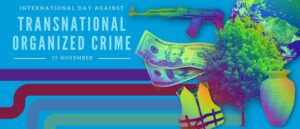
 The toll of organized transnational crime
Organized crime thrives worldwide, affecting governance and political processes, and weakening the advancement of the rule of law. It encompasses, inter alia, illicit trafficking of firearms, drugs, protected species, cultural property, or falsified medical products and, among its most severe manifestations, human trafficking and the smuggling of migrants. It also includes the laundering of proceeds of crime and obstruction of justice. Moreover, with all forms of organized crime shifting ever more to being dependent on or incorporating online aspects, including the use of virtual assets, its reach and capability of harm is increasing.
Organized criminal groups are flexible in changing or expanding their illicit businesses for profit. They misuse vulnerabilities and crisis situations such as the COVID-19 pandemic, economic downturns, natural disasters, and armed conflicts exploiting them for their own purposes.
Traditional, territorial-based criminal groups have evolved or have been partially replaced by smaller and more flexible networks with branches across several jurisdictions. Criminal actors, witnesses, victims and proceeds of crime may be located in many different States. It is therefore evident, that joint efforts from States across the world are required as organized crime cannot be tackled in isolation.
International Day for the Prevention of and Fight against All Forms of Transnational Organized Crime
In March 2024, the General Assembly declared 15 November the International Day for the Prevention of and Fight against All Forms of Transnational Organized Crime, in order to raise awareness of the threats posed by all forms of transnational organized crime and to enhance international cooperation in this regard.
It recognized the importance of the prevention of and fight against transnational organized crime for the implementation of the 2030 Agenda for Sustainable Development.
The General Assembly commemorated all victims of organized crime, including those who have lost their lives fighting such crime, in particular law enforcement and judicial personnel, and paying special tribute to all those persons, such as Judge Giovanni Falcone, whose work and sacrifice paved the way for the adoption of the Convention, and affirming that their legacy lives on through our global commitment to preventing and combating organized crime.