UNESCO works to accelerate scientific progress and ensure that knowledge benefits everyone through open science. The UNESCO Recommendation on Open Science, supported by 194 countries, outlines a set of actions to ensure open science for all.
Open science aims at making scientific knowledge openly available, accessible and reusable. The key elements of open science include: open access to scientific knowledge (including open access to scientific publications, data, educational resources, software and hardware); open infrastructures; open engagement with society and dialogue with indigenous and traditional knowledge systems, among others.
Source: Text & Image: https://www.unesco.org/en/open-science
Trust, Transformation, and Tomorrow: The Science We Need for 2050
In August 2023, the United Nations General Assembly declared 2024–2033 the International Decade of Sciences for Sustainable Development, underscoring the essential role of science in tackling the world’s most pressing challenges. This initiative recognizes that achieving the ambitions of the 2030 Agenda and beyond will require not only advances in knowledge and innovation but also stronger partnerships between science, policy, and society.
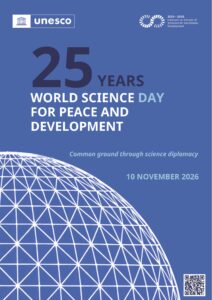
The 2026 theme is: Common ground through science diplomacy.